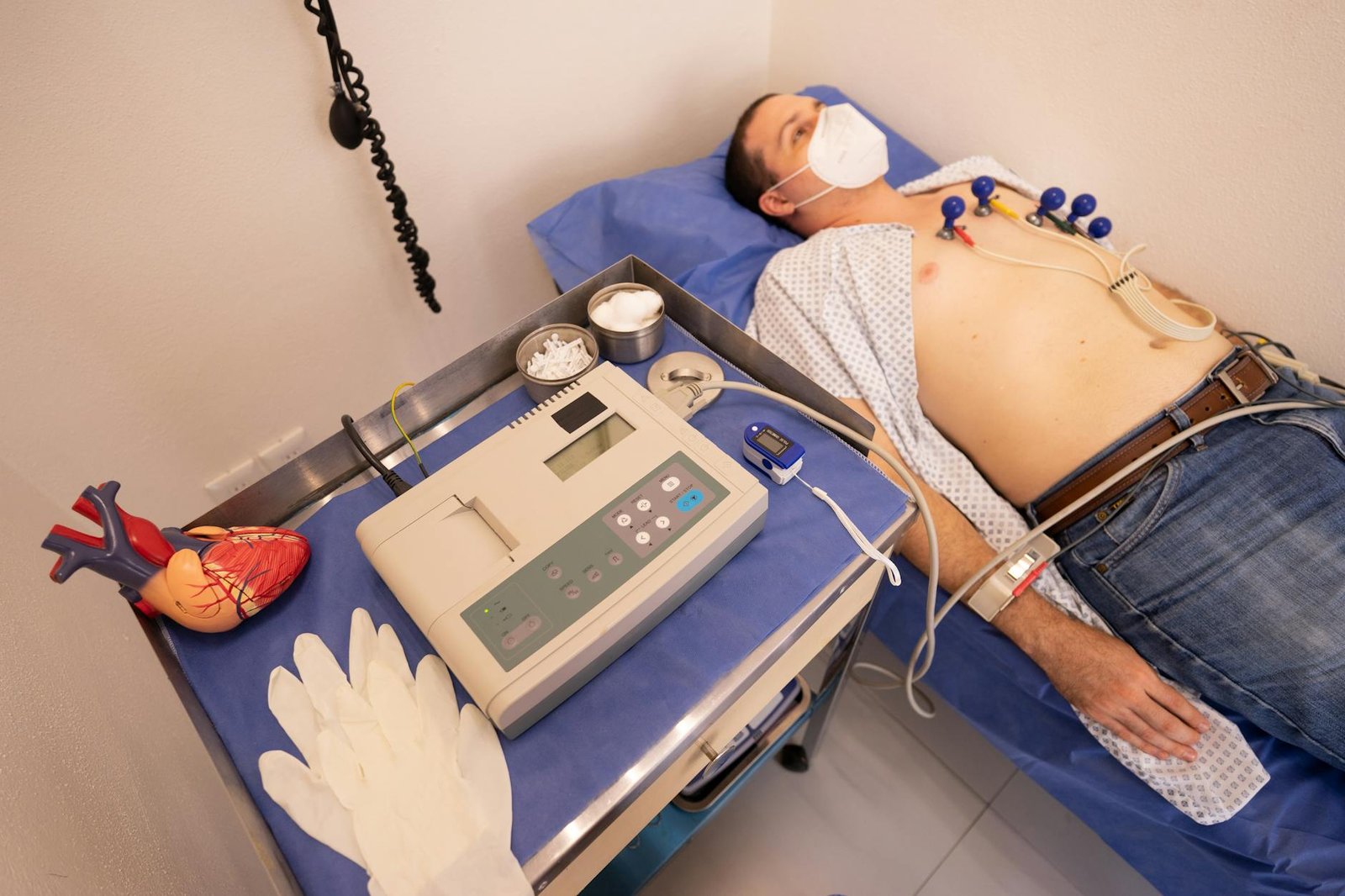
The Cardiology Medical Billing Guide for 2026: CPT Codes, Prior Authorization Rules, and Denial Prevention covers every major coding and compliance requirement cardiology practices face this year. Cardiology is one of the highest-complexity billing specialties in the US, with procedure-specific documentation requirements, payer-specific prior authorization mandates, and a denial rate that runs 10-14% industry-wide according to CMS benchmarking data. MMBS (MyMedicalBillSolution.com), a HIPAA-compliant revenue cycle management company serving cardiology practices in all 50 states, maintains a 98.2% clean claim rate across all specialties, compared to the industry average of 75-85% first-pass clean claim rates.
TL;DR: Cardiology billing requires CPT codes 93000, 93306, 92928, 93458, and 93015 paired with LCD-matching ICD-10 codes from the I20-I25 ischemic heart disease range. Prior authorization is required by most commercial payers for echocardiograms and catheterization. The industry denial rate runs 10-14%; MMBS cardiology clients average below 2% first-pass denials using pre-submission LCD cross-referencing.
Cardiology CPT Codes for 2026: Full Descriptions, RVU Values, and CMS Reimbursement Rates
- Specialty: Cardiology
- Highest-volume CPT codes: 93000 (ECG), 93306 (echocardiogram), 92928 (coronary stent), 93458 (left heart cath), 93015 (stress test)
- ICD-10 range: I20-I25 (ischemic heart disease)
- Primary LCD: L35040 (echocardiography coverage criteria, Noridian and Novitas)
- Industry denial rate: 10-14% first-pass (CMS benchmarking data)
- Prior auth payers: UnitedHealthcare, Anthem, Humana, Cigna (varies by procedure and market)
- Governing bodies: CMS (Physician Fee Schedule), AAPC (CPC/COC coding certification), NCCI (bundling edits)
The five highest-volume cardiology CPT codes in 2026 each carry specific documentation requirements, RVU weights, and CMS reimbursement rates that directly affect your practice's revenue cycle management outcomes. Getting these right on the first submission is the difference between a clean claim and a CO-4 denial for missing information.
CPT 93000 (Electrocardiogram, routine ECG with at least 12 leads; with interpretation and report) carries 0.17 work RVUs under the 2026 CMS Physician Fee Schedule (PFS). CMS reimburses CPT 93000 at approximately $17.63 nationally under Medicare Part B. Documentation must include a signed physician interpretation, not just a technician tracing. Claims submitted without the interpretation report referenced in the record trigger CO-16 (claim lacks information needed for adjudication) from most payers.
CPT 93306 (Echocardiography, transthoracic, real-time with image documentation; complete) carries 1.45 work RVUs with a national average CMS reimbursement of approximately $221.84. UnitedHealthcare requires prior authorization for CPT 93306 in most markets. CMS (Centers for Medicare & Medicaid Services, the federal agency administering Medicare Part B and publishing the annual Physician Fee Schedule) covers CPT 93306 under Local Coverage Determination (LCD) L35040 for specific cardiac indications including valvular disease, cardiomyopathy, and dyspnea workup. Review current cardiology-specific billing requirements on the MMBS specialty hub.
CPT 92928 (Percutaneous transcatheter placement of intracoronary stent, including coronary angioplasty when performed; single major coronary artery or branch) carries 21.36 work RVUs with national average CMS reimbursement near $1,186.50 in a facility setting. This code is facility-billed for hospital outpatient and ASC settings, with physicians billing the professional component separately using modifier 26. Prior authorization is required by virtually every commercial payer including Anthem, Aetna, Cigna, and UnitedHealthcare for CPT 92928.
CPT 93458 (Catheter placement in coronary artery(s) for coronary angiography, including intraprocedural injection(s) for coronary angiography; with left heart catheterization including intraprocedural injection(s) for left ventriculography, when performed) carries 7.72 work RVUs with national average CMS reimbursement near $492.00 in the facility setting. Documentation must specify the number of vessels injected, the technique used, and the supervising physician's real-time presence or review.
CPT 93015 (Cardiovascular stress test using maximal or submaximal treadmill or bicycle exercise, continuous electrocardiographic monitoring, and/or pharmacological stress; with physician supervision, with interpretation and report) carries 0.75 work RVUs with national average CMS reimbursement near $41.89. A common coding error is billing CPT 93015 when only the tracing was performed in-office but interpretation was done remotely, which requires splitting the code into CPT 93016 (supervision) and CPT 93018 (interpretation), or billing CPT 93017 (tracing only without supervision).
ICD-10 Codes for Cardiology Billing: I20-I25 Ischemic Heart Disease Classification and Documentation Rules
The ICD-10-CM code range I20-I25 covers ischemic heart diseases and represents the most commonly billed diagnosis group in cardiology. Accurate specificity within this range is required to pass payer edits and avoid medical necessity denials.
I20.9 (Angina pectoris, unspecified) is a valid code, but payers including Medicare and Humana increasingly require more specific documentation. When the record supports stable angina (I20.89) or unstable angina (I20.0), use the more specific code to avoid a CO-50 denial (non-covered service because it is not deemed a medical necessity).
I21.x (Acute myocardial infarction) codes require documentation of the site, type (STEMI vs NSTEMI), and timing (initial encounter vs subsequent vs sequela). I21.9 (Acute myocardial infarction, unspecified) is a valid code but should only be used when the record genuinely does not specify the site or type after physician query.
I25.10 (Atherosclerotic heart disease of native coronary artery without angina pectoris) is commonly paired with CPT 93306 or CPT 93015. When angina is also documented, the correct code is I25.110 (atherosclerotic heart disease of native coronary artery with unstable angina pectoris) or I25.118 (with other forms of angina pectoris). Mismatching the diagnosis code to the procedure code is a top-five reason for cardiology claim denial.
AAPC (American Academy of Professional Coders, the credentialing body that issues CPC and COC certifications) recommends that cardiology practices run a quarterly ICD-10 coding audit focused on I20-I25 specificity. MMBS includes this audit in all cardiology RCM contracts. Learn more about the denial prevention workflow MMBS applies to cardiology claims.
LCD Requirements and CMS Coverage Criteria for High-Volume Cardiology Procedures
Local Coverage Determinations (LCDs) issued by Medicare Administrative Contractors (MACs) define the diagnosis and documentation conditions under which cardiology procedures are covered for Medicare beneficiaries. Billing without satisfying LCD requirements triggers a CO-50 denial or a post-payment audit.
Noridian and Novitas, the two largest MACs by geography, each publish LCDs for echocardiography, stress testing, and cardiac catheterization. The LCD for transthoracic echocardiography (L35040 or the jurisdiction-equivalent) lists 23 covered indications including evaluation of cardiac function in patients with known or suspected heart failure, assessment of valvular disease severity, and workup of suspected cardiac source of embolism. When the documented indication does not match one of the listed covered conditions, the claim denies for medical necessity.
For cardiac catheterization (CPT 93458), the LCD requires documentation of specific clinical indications including one of: abnormal stress test result with EKG changes, angina refractory to medical management, or pre-operative evaluation for valvular surgery. Submitting CPT 93458 with only a general statement of "coronary artery disease" in the record, without specifying the indication, is the primary driver of medical necessity denials for this procedure.
MMBS billers cross-reference all cardiology procedure codes against the applicable MAC LCD before submission. This pre-claim scrub is part of the firm's standard workflow. See how the end-to-end billing workflow integrates LCD review into every cardiology claim.
Prior Authorization Requirements for Cardiology Procedures in 2026: Payer-by-Payer Rules
Prior authorization requirements for cardiology procedures vary significantly by payer and have expanded in 2026. Not tracking these requirements per payer per procedure is one of the most avoidable sources of cardiology claim denial.
Medicare Part B does not currently require prior authorization for the majority of outpatient cardiology CPT codes, but the CMS Prior Authorization Model for certain outpatient procedures has expanded. Starting in 2026, several additional cardiac imaging codes are under review for inclusion in the CMS Prior Authorization Program for Outpatient Hospital Services.
Commercial payer requirements differ substantially. UnitedHealthcare requires prior authorization for CPT 93306 (transthoracic echocardiogram), CPT 93458 (left heart catheterization), and CPT 92928 (coronary stent placement) in most markets. Anthem Blue Cross Blue Shield requires prior authorization for CPT 92928 and CPT 93306 but exempts ECGs (CPT 93000) and stress tests billed in-office. Humana requires authorization for any cardiac catheterization procedure regardless of setting. Cigna requires authorization for CPT 93306 only when billed in an outpatient hospital setting, not in a physician office setting.
The NPI (National Provider Identifier, the unique 10-digit identifier CMS assigns to every HIPAA-covered healthcare provider) must appear on every prior authorization request. Authorization granted under one NPI does not transfer to another provider or tax ID, a common pitfall in group practices where the rendering physician differs from the requesting physician. Our revenue cycle management program includes payer-specific prior authorization tracking for all cardiology procedures.
Top 5 Cardiology Claim Denial Reasons, CARC Codes, and Prevention Steps
Cardiology practices face a unique denial pattern driven by the complexity of their procedure mix, the frequency of prior authorization requirements, and the specificity demands of LCD-covered services. These are the five most common cardiology denial reasons by CARC code and the steps to prevent or appeal them.
CO-50 (Non-covered service, not deemed medically necessary): Triggered when the diagnosis codes submitted do not match the LCD indications for the procedure. Prevention: cross-reference ICD-10 codes against LCD before submission. Appeal: submit clinical notes documenting the covered indication plus the treating physician's attestation. The CO-50 denial resolution process is straightforward when documentation is complete.
CO-4 (Service inconsistent with modifier): Common when modifier 26 (professional component) or modifier TC (technical component) is applied incorrectly to CPT 93306 or CPT 93015. Prevention: verify whether the procedure was performed in a facility or non-facility setting before applying modifiers.
CO-16 (Claim lacks information needed for adjudication): Triggered by missing referring physician NPI, absent prior authorization number, or incomplete documentation. Review the CO-16 appeal requirements to understand what each payer demands before resubmission.
CO-97 (Payment adjusted because the benefit for this service is included in the payment/allowance for another service): Common when CPT 93000 is billed separately on the same date of service as CPT 93306 or CPT 93458. The ECG is bundled into the global package of most cardiac catheterization and echocardiography procedures per NCCI (National Correct Coding Initiative) edits. Prevention: review NCCI edit pairs for your procedure combinations before submission.
CO-29 (The time limit for filing has expired): Cardiology procedures with delayed authorization or contested medical necessity decisions often exceed payer timely filing windows. Most commercial payers require submission within 90-180 days of service; Medicare requires submission within 12 months of the date of service. The CO-29 denial is rarely overturnible on appeal, making systematic tracking of all authorization decisions and resubmission deadlines essential.
How MMBS Handles Cardiology Revenue Cycle Management: Performance Benchmarks and Process
MMBS (MyMedicalBillSolution.com) provides end-to-end outsourced billing for cardiology practices of all sizes across all 50 US states. The MMBS cardiology billing workflow is built around three performance benchmarks that directly affect practice cash flow.
First, MMBS maintains a 98.2% clean claim rate across all specialties including cardiology, compared to the industry average of 75-85% first-pass clean claim rates. This is achieved through a pre-submission scrub that checks: correct CPT-ICD-10 pairing against LCD requirements, modifier accuracy for facility vs non-facility settings, prior authorization number presence for all payer-required procedures, and NPI validation against the NPPES database.
Second, MMBS's certified billing team reduces average accounts receivable (AR) days to 28-32, compared to the industry average of 45-55 AR days. For cardiology, where a single CPT 92928 claim represents over $1,000 in receivable value, faster AR resolution has a material impact on monthly collections.
Third, MMBS's denial management workflow resolves 85% of appealable denials on first pass. When a cardiology claim denies for CO-50 or CO-16, the MMBS appeals team pulls the original clinical notes, prepares a structured appeal letter referencing the applicable LCD, and resubmits within the payer's appeal window. EOB (Explanation of Benefits) and ERA (Electronic Remittance Advice) data is reviewed by certified billers, not automated scripts, to ensure denial reasons are correctly interpreted before appeal strategy is selected.
MMBS billers hold active AAPC certifications (CPC and COC credentials) and receive annual training on CMS Physician Fee Schedule updates and NCCI edit changes. All cardiology claims are processed in compliance with HIPAA (Health Insurance Portability and Accountability Act, governed by 45 CFR Parts 160 and 164), with MMBS serving as a signed Business Associate (BAA) for every practice client. Data exchanges with EHR (Electronic Health Record) systems via HL7-compliant interfaces or direct CSV imports, depending on the practice's system. Visit the AAPC-certified cardiology coding services page to learn about our specialty-specific coding team.
Frequently Asked Questions
What is the average denial rate for cardiology medical billing in 2026?
The industry average first-pass denial rate for cardiology claims ranges from 10% to 14%, per CMS benchmarking data, driven by the high frequency of prior authorization requirements and LCD-covered procedures. MMBS cardiology clients achieve accounts receivable resolution in 28-32 days on average, compared to the 45-55 day industry benchmark, as a direct result of the pre-submission LCD cross-reference and prior auth tracking built into every workflow.
What CPT codes are used most often in cardiology billing for 2026?
The five highest-volume cardiology CPT codes are: CPT 93000 (routine ECG, CMS rate approx. $17.63), CPT 93306 (transthoracic echocardiogram, CMS rate approx. $221.84), CPT 92928 (coronary stent placement, CMS facility rate approx. $1,186.50), CPT 93458 (left heart catheterization, CMS facility rate approx. $492.00), and CPT 93015 (cardiovascular stress test, CMS rate approx. $41.89). All rates are based on the 2026 CMS Physician Fee Schedule national averages.
Does Medicare require prior authorization for cardiology procedures in 2026?
Medicare Part B does not currently require prior authorization for most standard outpatient cardiology CPT codes. However, CMS has expanded its Prior Authorization Program for Outpatient Hospital Services, and additional cardiac imaging codes are under review for 2026 inclusion. Commercial payers including UnitedHealthcare, Anthem, and Humana require prior authorization for CPT 93306, CPT 93458, and CPT 92928 in most markets.
What ICD-10 codes are required for cardiology echocardiogram billing?
CPT 93306 (transthoracic echocardiogram) must be paired with an ICD-10 code that matches one of the covered indications in the applicable MAC LCD (such as L35040). Commonly covered diagnosis codes include I50.9 (heart failure, unspecified), I34.0 (nonrheumatic mitral valve insufficiency), I25.10 (atherosclerotic heart disease without angina), and I48.91 (longstanding persistent atrial fibrillation). Submitting CPT 93306 with a non-covered diagnosis code triggers a CO-50 denial for medical necessity.
How long does a cardiology practice have to appeal a denied claim?
Appeal windows vary by payer. Medicare Part B allows 120 days from the date of the initial determination to file a redetermination. Most commercial payers including UnitedHealthcare and Anthem allow 60-180 days from the date of the EOB (Explanation of Benefits). The ERA (Electronic Remittance Advice) received at claim adjudication contains the denial CARC code and the payer's appeal deadline. Tracking these windows systematically is the only way to avoid a CO-29 timely filing denial on resubmission.
What is the difference between CPT 93015, 93016, and 93017 for stress testing?
CPT 93015 (cardiovascular stress test with physician supervision and interpretation) is a global code billed when one practice performs the full service. CPT 93016 (physician supervision only, without interpretation) is billed when a cardiologist supervises the test but a separate physician interprets it. CPT 93017 (tracing only, without supervision or interpretation) is used when the practice only performs the technical component. Billing CPT 93015 when the cardiologist only supervised but did not interpret is a CO-4 modifier error and one of the more common cardiology compliance audit findings.
If your cardiology practice is dealing with high denial rates, slow AR, or prior authorization bottlenecks, MMBS is ready to help. Contact our team at MMBS for a free cardiology billing assessment and see how a pre-submission LCD scrub changes your monthly collections picture.