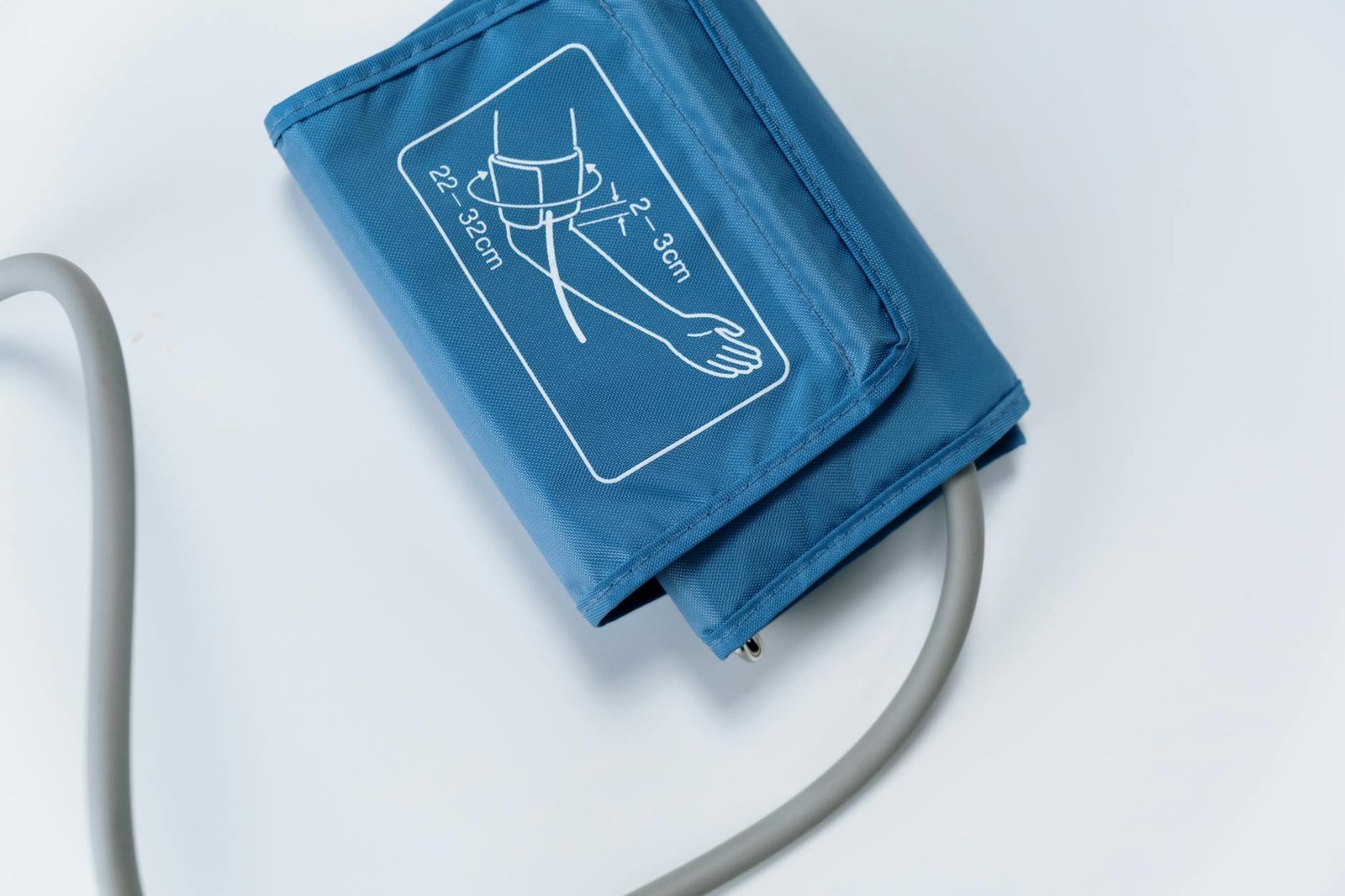
ICD-10 code I10, classified as essential primary hypertension, is among the most frequently submitted diagnosis codes in outpatient medical billing, appearing on hundreds of millions of claims annually across primary care, internal medicine, cardiology, and nephrology practices. Getting I10 right matters beyond simple coding accuracy: it affects Medicare Advantage risk scores, comorbidity capture for chronic care management billing, and denial rates across all major payers. MMBS processes I10 claims daily for practices in all 50 states, maintaining a 98.2% clean claim rate across all specialties including hypertension-related services.
TL;DR: ICD-10 code I10 is the billable code for essential (primary) hypertension, meaning high blood pressure with no identifiable secondary cause. It is one of the most frequently submitted diagnosis codes in outpatient billing but does NOT map to the CMS HCC risk adjustment model. When hypertension involves the heart or kidneys, I11, I12, or I13 applies instead.
ICD-10 Code I10 Definition: What Essential Primary Hypertension Means for Billing Accuracy
ICD-10-CM code I10 (Essential (primary) hypertension) describes high blood pressure with no identifiable secondary cause. CMS (Centers for Medicare & Medicaid Services) administers Medicare Part B and publishes the annual ICD-10-CM Official Guidelines for Coding and Reporting, which classify I10 as a chronic condition that must be coded every time it affects or influences the patient's care, treatment, or management during a visit, per Section IV of those guidelines.
- Code: I10
- Description: Essential (primary) hypertension
- ICD-10-CM Chapter: Chapter 9 , Diseases of the Circulatory System (I00-I99)
- Block: I10-I16 , Hypertensive diseases
- Billable: Yes (specific, single-subdivision code)
- HCC mapping: Not mapped , does not generate a CMS risk adjustment score
- Effective date: October 1, 2015 (current ICD-10-CM revision)
- Most common pairings: CPT 99213, 99214, 99215, 99490, 99491
Code hierarchy:
- ICD-10-CM (Code Set)
- ↳ Chapter 9 , Diseases of the Circulatory System (I00-I99)
- ↳↳ Block I10-I16 , Hypertensive diseases
- ↳↳↳ Code I10 , Essential (primary) hypertension
The word "essential" in the code description means idiopathic, not patient-specific. It does not mean the hypertension is mild or uncomplicated. Many coders mistakenly assume I10 is always the right code for any hypertension diagnosis. That assumption causes revenue loss. When hypertension has progressed to involve the heart, kidneys, or both, different codes apply: I11 (hypertensive heart disease), I12 (hypertensive chronic kidney disease), I13 (hypertensive heart and chronic kidney disease), and I15 (secondary hypertension). Submitting I10 when I11 or I12 applies undercodes the encounter, reducing the HCC risk score for Medicare Advantage patients and potentially triggering a retrospective audit flag.
AAPC (American Academy of Professional Coders, the credentialing body that issues CPC and CPMA certifications) has flagged I10 vs. I11-I15 misuse as one of the top ten coding compliance risks in primary care and internal medicine practices. Coders must review physician documentation each visit to confirm which category applies before selecting the final code. MMBS coders are AAPC-certified and apply ICD-10-CM guidelines section by section to ensure correct code selection on every claim.
Related ICD-10 Codes: When I11, I12, I13, I14, and I15 Replace I10 in Claim Submission
ICD-10 coding for hypertension follows a causal relationship rule that CMS encodes directly in the Official Guidelines. When the provider documents that a patient has both hypertension and heart failure, the correct code is I11.0 (hypertensive heart disease with heart failure), not I10 plus a separate heart failure code. The two conditions are presumed related under ICD-10-CM guidelines unless the provider explicitly documents otherwise. The same causal presumption governs chronic kidney disease (CKD).
- I11.0 , Hypertensive heart disease with heart failure (requires additional code from I50 for type of heart failure)
- I11.9 , Hypertensive heart disease without heart failure
- I12.9 , Hypertensive chronic kidney disease with CKD stage 1-4 or unspecified (requires additional N18 code for CKD stage)
- I13.10 , Hypertensive heart and CKD without heart failure, stage 1-4 or unspecified
- I15.0 , Renovascular hypertension (secondary , identifiable cause)
- I15.1 , Hypertension secondary to other renal disorders
- I15.2 , Hypertension secondary to endocrine disorders
Selecting I10 when I12.9 is correct is one of the denial patterns MMBS's denial management team sees most frequently from practices that handle their own ICD-10 coding in-house. Payers like UHC (UnitedHealthcare) and Anthem apply clinical edit rules that cross-reference diagnosis codes against the CPT codes billed. When a nephrology CPT code pairs with I10 instead of I12 or I13, payers flag the claim for medical necessity review, generating a CO-50 denial (non-covered service, not reasonable and necessary) or a request for additional documentation.
For practices building a denial prevention workflow around ICD-10 mismatches, the MMBS resource on responding to CO-16 missing information denials covers how to structure appeals when payers request supporting documentation after a diagnosis coding dispute.
CPT Codes That Pair with ICD-10 I10: Office Visit Billing and Chronic Care Management
Most hypertension encounters in outpatient settings are billed under Evaluation and Management (E/M) CPT codes. The correct E/M level depends on medical decision making (MDM) complexity or total provider time, per CMS's 2021 E/M guidelines published in the Physician Fee Schedule (PFS) final rule.
- CPT 99213 (Established patient office visit, low MDM or 20-29 minutes) , avg CMS reimbursement $76-$92: appropriate when hypertension is stable, medication is unchanged, and no comorbidities complicate management.
- CPT 99214 (Established patient office visit, moderate MDM or 30-39 minutes) , avg CMS reimbursement $110-$135: appropriate when the provider adjusts medication, reviews lab results for organ impact, or manages a comorbid condition like diabetes alongside hypertension.
- CPT 99215 (Established patient office visit, high MDM or 40-54 minutes) , avg CMS reimbursement $148-$175: appropriate when hypertension is poorly controlled, the patient has multiple complicating chronic conditions, or management requires extensive review of data and independent interpretation.
Hypertension is also a qualifying chronic condition for Chronic Care Management (CCM) services under CPT 99490 (first 20 minutes of CCM, avg CMS reimbursement $62) and CPT 99491 (first 30 minutes of physician-directed CCM, avg CMS reimbursement $84). Practices that document I10 or I11 alongside at least one other chronic condition, establish a care plan in the EHR, and provide non-face-to-face care coordination can bill these monthly. Many primary care practices leave CCM revenue uncaptured because their billing team does not connect the ICD-10 code to CPT eligibility. MMBS's end-to-end billing workflow includes CCM eligibility screening as part of the standard service for primary care and internal medicine clients.
For a detailed breakdown of E/M documentation requirements at the 99214 level, the MMBS guide to MDM scoring and audit triggers for the 99214 office visit walks through time-based billing alternatives and common payer edit patterns.
CMS HCC Risk Adjustment: Why I10 Is Excluded and Which Hypertension Codes Count
CMS's Hierarchical Condition Category (HCC) model assigns risk scores to Medicare Advantage (MA) enrollees based on diagnosis codes submitted on claims throughout the year. A higher HCC risk score means higher monthly capitation payments from CMS to the MA plan, and in turn, more resources allocated to the patient's care management. I10 (essential primary hypertension, uncomplicated) is NOT included in the CMS HCC mapping table. Submitting I10 alone does not generate an HCC score for that patient.
The hypertension codes that CMS maps to HCC categories are:
- I11.0 (hypertensive heart disease with heart failure) maps to HCC 85 (congestive heart failure)
- I12.9 (hypertensive CKD, stage 1-4) maps to HCC 136 (chronic kidney disease, stage 3-5) when the N18 stage code is included
- I13.10 / I13.11 (hypertensive heart and CKD) maps to both HCC 85 and HCC 136
For Medicare Advantage patients, failing to capture I11 or I12 when it applies , and instead defaulting to I10 , means the practice is underdocumenting the patient's clinical complexity. CMS's Risk Adjustment Data Validation (RADV) audits specifically check whether the submitted diagnosis code is supported by medical record documentation. MMBS's AAPC-certified coders review physician notes to ensure hypertension complications are coded to the highest specificity supportable by documentation before submission, protecting clients from RADV recoupment risk and supporting accurate per-member per-month payments for MA plans.
Practices that want to understand the full revenue cycle impact of ICD-10 coding accuracy should review MMBS's overview of how outsourced revenue cycle management captures HCC risk, which covers HCC workflows as a core component of Medicare Advantage billing programs.
Documentation Rules for I10: What Physicians Must Record for Clean Claim Submission
HIPAA (Health Insurance Portability and Accountability Act, governed by 45 CFR Parts 160 and 164) requires that all diagnosis codes submitted on claims be supported by physician documentation in the patient's EHR (Electronic Health Record). For I10, CMS guidelines state the code should be reported each visit when hypertension affects the patient's management, even if the condition is stable and medication is unchanged. The hypertension diagnosis must appear in the assessment and plan section of the visit note, not only in the problem list.
Common documentation gaps that MMBS's auditors identify in primary care practices:
- Provider writes "HTN" in the problem list but does not mention it in the assessment/plan for the current visit. Payers audit claim-note alignment, and a diagnosis only in the problem list without visit-level mention is a medical necessity denial risk.
- Provider documents "hypertension with CKD stage 3" verbally but the coder submits I10 instead of I12.9 + N18.3 because the coder did not read the note closely enough.
- Blood pressure readings are documented but no physician interpretation or management decision is recorded. Without documented decision-making tied to hypertension, the claim cannot support a 99214 MDM level based on chronic condition management.
- Prior authorization is not obtained when required. Some commercial payers require prior authorization for nephrology consultations when the referring diagnosis is hypertension-related CKD. Failure to obtain authorization triggers a CO-4 denial (prior auth required). MMBS's authorization team verifies payer requirements before claim submission for all applicable specialty referrals.
MMBS's billing team works directly with practices to design documentation templates within the EHR that prompt physicians to record hypertension management decisions in a format that supports both the correct ICD-10 code and the appropriate E/M level. This reduces denial rates and supports audit defensibility. The MMBS guide on audit-defensible HIPAA compliant billing practices covers the full compliance framework for protecting your practice during payer reviews.
How MMBS Handles I10 Hypertension Billing: Performance Benchmarks and Denial Prevention
For hypertension-related claims, the most frequent denial categories MMBS prevents are: diagnosis-to-procedure code mismatches (CO-4, CO-50), missing or insufficient documentation (CO-16), and secondary payer coordination errors (CO-22) for Medicare Advantage patients with supplemental coverage. MMBS resolves 85% of appealable denials on the first pass, meaning most I10-related denials that do occur are corrected and paid within the same billing cycle.
The workflow MMBS applies to hypertension claim submissions includes:
- Pre-submission code review: AAPC-certified coders verify I10 vs. I11-I15 selection against physician documentation before every claim goes to the clearinghouse.
- NPI (National Provider Identifier) validation: MMBS confirms the rendering provider's NPI is current and linked to the correct Tax Identification Number (TIN) before submission, preventing administrative rejections that affect clean claim rate.
- EOB and ERA reconciliation: Every EOB (Explanation of Benefits) and ERA (Electronic Remittance Advice) received from Medicare Part B or commercial payers is reviewed for CARC code patterns. Hypertension claims that return with CARC CO-50 trigger an automatic appeal with attached clinical notes within 5 business days.
- AR management: MMBS reduces average accounts receivable (AR) days to 28-32, compared to the industry average of 45-55 AR days. For chronic disease management claims like hypertension-related E/M, faster AR cycles mean practices receive consistent monthly revenue without long collection gaps.
Practices seeking to improve ICD-10 coding accuracy across their entire chronic disease patient population should explore MMBS's specialty-specific coding review and documentation feedback services, which include monthly coding accuracy reports. Primary care practices with significant hypertension patient panels can also review the MMBS guide on E/M optimization and chronic care coding for primary care billing for workflow-specific guidance.
Frequently Asked Questions
What does ICD-10 code I10 essential hypertension mean in medical billing?
ICD-10 code I10 (Essential (primary) hypertension) describes high blood pressure with no identifiable underlying cause, classified in Chapter 9 of ICD-10-CM (Diseases of the Circulatory System, I00-I99), within the hypertensive diseases block I10-I16. In medical billing, I10 is reported on every claim where hypertension affects the patient's care during that visit, per Section IV of the CMS Official Guidelines for Coding and Reporting. I10 does not map to the CMS HCC risk adjustment model, so practices with Medicare Advantage patients must confirm whether a more specific code (I11-I13) applies based on documented complications.
When should I use I10 versus I11 or I12 for hypertension coding?
I10 (essential primary hypertension) is used when hypertension has no identified secondary cause and no documented complications involving the heart or kidneys. I11 (hypertensive heart disease) replaces I10 when the provider documents hypertension with heart failure or other cardiac involvement. I12 (hypertensive chronic kidney disease) replaces I10 when the provider documents hypertension with CKD, using an additional N18 code for the CKD stage. Per ICD-10-CM guidelines, CMS presumes a causal relationship between hypertension and both heart disease and CKD, so coders should not require explicit provider linkage language , the combination of documented conditions is sufficient.
Does ICD-10 I10 qualify for CMS HCC risk adjustment for Medicare Advantage billing?
No. ICD-10 code I10 (essential primary hypertension, uncomplicated) is not included in the CMS HCC mapping table for risk adjustment. Only hypertension codes that document organ involvement qualify: I11.0 maps to HCC 85 (congestive heart failure) and I12.9 combined with an N18 stage code maps to HCC 136 (chronic kidney disease). Practices that default to I10 for all hypertension patients lose HCC revenue and create compliance exposure if retrospective RADV audits find undercoded records.
What CPT codes are commonly billed with ICD-10 I10 for office visits?
The most common CPT codes paired with ICD-10 I10 in outpatient settings are CPT 99213 (established patient, low complexity, avg CMS reimbursement $76-$92), CPT 99214 (established patient, moderate complexity, avg CMS reimbursement $110-$135), and CPT 99215 (established patient, high complexity, avg CMS reimbursement $148-$175). The correct level depends on the medical decision making (MDM) score or total provider time, per CMS 2021 E/M guidelines. Stable, well-managed hypertension without comorbidities typically supports 99213. Medication adjustments or lab-data review to assess organ impact typically support 99214.
What is the most common denial reason for ICD-10 I10 hypertension claims?
The most common denial reason for I10 claims is a diagnosis-to-procedure code mismatch, which returns as CARC code CO-50 (non-covered service, not reasonable and necessary) or CO-16 (missing or insufficient information). This typically occurs when a nephrology or cardiology CPT code is paired with I10 instead of I12 or I11, triggering a payer medical necessity edit. MMBS's denial management workflow achieves an 85% first-pass resolution rate on appealable denials by routing CO-50 and CO-16 denials for same-cycle appeal with supporting clinical documentation attached.
How does HIPAA affect medical billing documentation for hypertension claims?
HIPAA (Health Insurance Portability and Accountability Act, 45 CFR Parts 160 and 164) requires that all diagnosis codes submitted on claims be supported by physician documentation in the patient's EHR. For ICD-10 I10, the hypertension diagnosis must appear in the assessment and plan section of the visit note for the date of service billed, not only in the problem list. Payers conducting post-payment audits , including CMS RADV audits for Medicare Advantage , compare submitted diagnosis codes against signed medical records. Claims where I10 appears on the claim but is absent from the visit note are subject to recoupment. MMBS's AAPC-certified coders review physician notes before submission to confirm diagnosis code support, reducing recoupment exposure for practices with high Medicare Advantage patient volumes.
Managing ICD-10 hypertension coding correctly from documentation through claim submission and denial resolution is a process with real financial consequences for primary care, internal medicine, cardiology, and nephrology practices. MMBS is built to handle that process end to end. If your practice is seeing I10-related denials, undercoded HCC encounters, or inconsistent E/M levels on hypertension visits, contact MMBS through our free billing assessment form to get a no-obligation audit of your hypertension billing workflow.