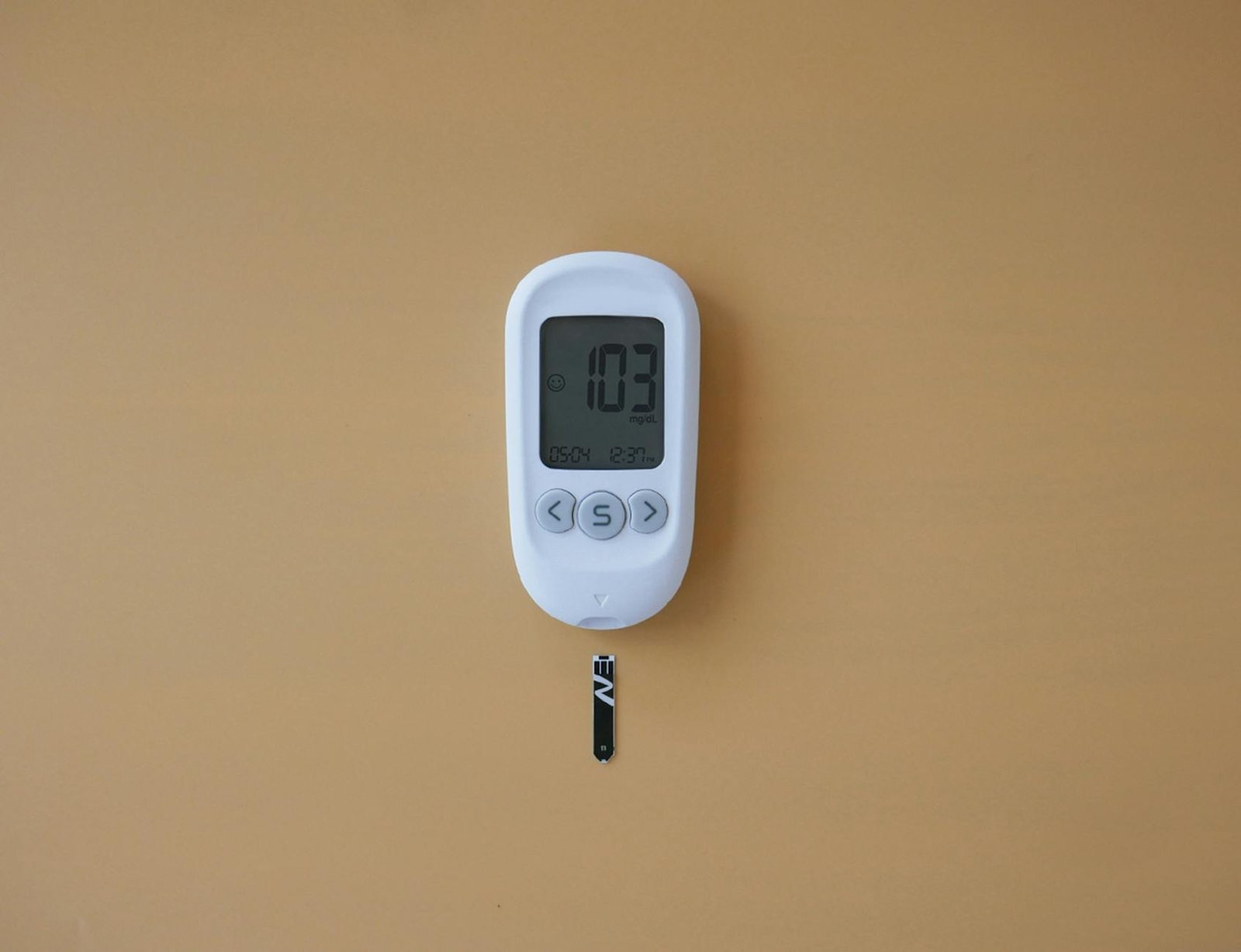
ICD-10 E11.9 Type 2 Diabetes Without Complications: Medical Billing Guide for 2026 covers every documentation requirement, payer rule, secondary code, and denial scenario your billing team needs to process these claims cleanly. E11.9 (Type 2 diabetes mellitus without complications, per ICD-10-CM chapter E11) is the most frequently reported outpatient diagnosis in the United States, appearing across primary care, endocrinology, nephrology, and ophthalmology claims. CMS (Centers for Medicare and Medicaid Services, the federal agency that administers Medicare Part B and publishes the annual Physician Fee Schedule) data shows more than 37 million Americans carry a diabetes diagnosis. Diabetes coding is one of the most common areas where practices lose clean claim margin, and MMBS maintains a 98.2% clean claim rate across all specialties compared to the industry average of 75 to 85%.
TL;DR: E11.9 is the ICD-10-CM code for Type 2 diabetes mellitus without complications. It belongs to HCC 19 in Medicare Advantage, requires secondary codes Z79.4 or Z79.84 when insulin or oral agents are used, and must be replaced by a complication-specific code whenever diabetic nephropathy, retinopathy, or neuropathy is documented in the encounter note.
ICD-10 E11.9 Code Definition: Full Description, Category, and 2026 Validity
E11.9 is the ICD-10-CM code for Type 2 diabetes mellitus without complications. It belongs to the E11 category in Chapter 4 of ICD-10-CM (Endocrine, Nutritional and Metabolic Diseases, E00 to E89). The final character .9 signals that the provider has documented no diabetes-related complications at the current encounter. E11.9 remains valid for 2026 with no descriptor changes in the October 2025 ICD-10-CM update.
- Code: E11.9
- Full description: Type 2 diabetes mellitus without complications
- ICD-10-CM Chapter: Chapter 4, Endocrine, Nutritional and Metabolic Diseases (E00-E89)
- Block: E08-E13, Diabetes mellitus
- Category: E11, Type 2 diabetes mellitus
- Billable: Yes (valid for HIPAA-compliant claim submission as a single specific code)
- Effective date: October 1, 2015 (unchanged in October 2025 ICD-10-CM revision)
- HCC mapping: HCC 19 (Diabetes Without Complication); RAF approximately 0.105 under CMS-HCC model
Code hierarchy:
- ICD-10-CM (Code Set)
- ... Chapter 4: Endocrine, Nutritional and Metabolic Diseases (E00-E89)
- ...... Block E08-E13: Diabetes mellitus
- ......... Category E11: Type 2 diabetes mellitus
- ............ Code E11.9: Type 2 diabetes mellitus without complications
When complications exist, coders must assign the specific complication code instead. Billing E11.9 when the record contains documented diabetic nephropathy (E11.65), retinopathy (E11.311 through E11.359), or peripheral neuropathy (E11.40) is a coding error that triggers post-payment audits. AAPC (American Academy of Professional Coders, the credentialing body that issues CPC and COC certifications) guidelines require the most specific code supported by documentation at every encounter.
E11.9 Documentation Requirements: What the Provider Must Record Before Claim Submission
CMS requires that the billing team confirm the provider has explicitly documented Type 2 diabetes in the current encounter note before assigning E11.9. A prior diagnosis in the problem list alone does not satisfy CMS claim submission standards for Medicare Part B professional claims. The condition must be addressed, monitored, or managed during the visit. Acceptable phrases include "Type 2 diabetes mellitus, controlled," "T2DM, no current complications noted," and "Non-insulin-dependent diabetes mellitus, stable." If the provider writes only "diabetes" with no type specified, ICD-10-CM guidelines default to Type 2, but querying the provider is best practice, particularly when the EHR (Electronic Health Record) shows insulin use. The MMBS coding team reviews the assessment section, problem list, medication list, and lab references before finalizing the code on every diabetes claim.
E11.9 Complication Code Rules: When E11.9 Alone Is Incorrect
The most common E11.9 error is assigning the unspecified code when complications exist in the record. Coders must review the full encounter note, active problem list, and consultant notes. If any of these conditions are linked to the patient's diabetes, E11.9 alone is incorrect: diabetic nephropathy (E11.21), CKD due to diabetes (E11.22 plus N18.x), retinopathy (E11.311 through E11.359), peripheral neuropathy (E11.40), foot ulcer (E11.621 plus L97.x), and hypoglycemia (E11.641). HIPAA (Health Insurance Portability and Accountability Act, governed by 45 CFR Parts 160 and 164) requires all submitted codes to accurately reflect the clinical record. Submitting E11.9 when complications exist carries recoupment risk under CMS post-payment review programs, including Targeted Probe and Educate (TPE) audits applied to high-volume chronic disease codes.
HCC Risk Adjustment: E11.9 Medicare Advantage RAF Value and Under-Coding Risk
For Medicare Advantage patients, E11.9 maps to HCC 19 (Diabetes Without Complications), with a risk adjustment factor of approximately 0.105. Medicare Advantage plans require the condition to be documented and reported on at least one claim per calendar year for the plan to capture proper risk. If documented complications qualify the patient for HCC 18 (Diabetes With Chronic Complications) and the practice codes E11.9 instead, that constitutes under-coding and triggers CMS Risk Adjustment Data Validation (RADV) audits. The NPI (National Provider Identifier, the 10-digit CMS-issued identifier required on all Medicare and Medicaid claims) of the rendering provider must appear on every claim submitted to a Medicare Advantage plan. Chart audit protocols at MMBS include HCC validation before claims are batched, which the revenue cycle management workflow enforces at the pre-submission scrub stage.
Medicare Part B and Commercial Payer Policies for E11.9: CMS, Aetna, BCBS, and Prior Auth Rules
CMS processes E11.9 without issue when documentation supports the code. The most common Medicare denial tied to E11.9 is the accompanying E/M level, not the diagnosis itself. Reviewers downcode visits where a provider bills CPT 99214 (established patient, moderate complexity, average CMS reimbursement approximately $148) or CPT 99215 (high complexity, approximately $218) with only routine diabetes monitoring; the EOB (Explanation of Benefits) or ERA (Electronic Remittance Advice) reflects the downcode via CARC CO-50. Aetna requires documentation of a new or changed diagnosis on DSMT claims (CPT G0108 or G0109) when E11.9 is the primary diagnosis; submitting without that context generates a medical necessity denial. BCBS plans in most states require annual HbA1c documentation, and missing lab dates trigger soft audits. Prior authorization is generally not required for routine E/M visits with E11.9, but Medicare Advantage plans may impose PA requirements for DSMT or specialist referrals beyond the CMS baseline. For how MMBS handles Medicare claims for diabetes-heavy practices, see our payer-specific billing guide.
Secondary ICD-10 Codes Required with E11.9: Z79.4, Z79.84, and Supporting Diagnoses
E11.9 rarely stands alone on a clean claim. Z79.4 (Long-term use of insulin) is required whenever a Type 2 patient uses insulin and is one of the most commonly missed secondary codes in diabetes billing. Z79.84 (Long-term use of oral hypoglycemic drugs) applies for metformin or glipizide users. E66.01 or E66.09 (Obesity) applies when obesity is documented and addressed at the visit. Omitting these codes is a claim accuracy issue flagged during remittance posting audits. Practices using MMBS's ICD-10 coding and pre-submission scrub services get a secondary-code checklist built into every diabetes claim review. For code-level reference, see the E11.9 diabetes coding reference page.
Top 4 E11.9 Claim Denial Reasons, CARC Codes, and Appeal Pathways
Four patterns account for most E11.9 denials. Using E11.9 when complications are documented elsewhere generates CO-4 denials (procedure inconsistent with modifier or diagnosis). Omitting Z79.4 on insulin patients leads to post-payment recoupment flags under CMS documentation standards. Billing CPT 99214 or 99215 with routine-only monitoring triggers CO-50 downcodes. Submitting DSMT claims without referral documentation generates CO-22 medical necessity denials. Appeals start with the encounter note: attach documentation showing the diagnosis was assessed, cite the applicable LCD or NCD, and resubmit with a cover letter. For missing-information denials, the CO-16 denial code guide outlines the appeal letter format MMBS uses. MMBS's denial resolution and claims-management process resolves 85% of appealable E11.9 denials on first submission of the appeal.
How MMBS Handles E11.9 Diabetes Claims: Performance Benchmarks
MMBS is a HIPAA-compliant billing provider serving all 50 US states, with an AAPC-certified team that holds active CPC, COC, and CPMA credentials. The team follows a four-step E11.9 workflow: chart review for complication codes, secondary code assignment (Z79.4, Z79.84), E/M level validation, and pre-submission scrubbing. This workflow produces a 98.2% clean claim rate across all specialties and reduces average AR days to 28 to 32, compared to the industry average of 45 to 55 AR days. MMBS provides primary care billing for high-volume diabetes practices and outsourced billing for multi-provider groups that need scalable ICD-10 accuracy without adding in-house coding staff. For a full overview of end-to-end workflow, the MMBS billing services overview covers claim lifecycle from charge capture through remittance posting.
Frequently Asked Questions
What is ICD-10 code E11.9 used for in medical billing?
ICD-10 code E11.9 (Type 2 diabetes mellitus without complications) is assigned when the provider documents Type 2 diabetes as an active or monitored condition during the encounter and no diabetes-related complications appear in the note or problem list. It is valid for Medicare Part B, Medicaid, and commercial payers. ICD-10-CM guidelines require the most specific code available, so E11.9 is replaced by a complication-specific code such as E11.40 whenever peripheral neuropathy or another complication is documented.
What is the average denial rate for E11.9 diabetes billing claims?
The industry average first-pass denial rate for outpatient E11.9 claims ranges from 6% to 10%, based on CMS benchmarking data for chronic disease management codes. Common denial reasons include E/M level downcodes (CO-50), missing secondary codes like Z79.4, and bundling edits on Medicare Annual Wellness Visit claims. Practices that outsource to a structured coding workflow typically see first-pass denial rates below 2% on E11.9 claims.
Does E11.9 require prior authorization from Medicare or commercial payers?
E11.9 does not require prior authorization for standard office visits billed under CPT 99213 or 99214 under Medicare Part B. However, diabetes self-management training (DSMT, CPT G0108 or G0109) requires a physician referral and, for Aetna and UnitedHealthcare, documented medical necessity tied to a new or changed diagnosis. Medicare Advantage plans may impose plan-specific PA requirements for specialist referrals or DSMT programs beyond the CMS baseline coverage rules.
What secondary ICD-10 codes are required alongside E11.9?
The most frequently required secondary codes with E11.9 are Z79.4 (long-term insulin use) and Z79.84 (long-term oral hypoglycemic use). Both are mandatory under CMS and AAPC coding guidelines when the conditions are documented in the encounter note. Omitting Z79.4 on insulin-dependent patients is among the top E11.9 errors identified in post-payment audits. Obesity (E66.x) and smoking history (Z87.891) codes apply when those conditions are documented and addressed at the visit.
How does E11.9 affect Medicare Advantage HCC risk adjustment?
E11.9 maps to HCC 19 (Diabetes Without Complications) in the CMS-HCC model, with a risk adjustment factor of approximately 0.105. Medicare Advantage plans require the condition to appear on at least one claim per calendar year for proper risk capture. If documented complications support HCC 18 (Diabetes With Chronic Complications) and the practice assigns E11.9 instead, that constitutes under-coding and can trigger CMS RADV audits with plan-level recoupments. The AR days benchmark of 28 to 32 days that structured billing workflows achieve reflects, in part, accurate HCC coding that prevents retroactive claim adjustments.
What is the difference between E11.9 and E11.65 in diabetes billing?
E11.9 (Type 2 diabetes mellitus without complications) is used when the provider documents no current diabetes-related complications. E11.65 (Type 2 diabetes mellitus with hyperglycemia) is used when elevated blood glucose is documented as an active complication at the encounter. E11.65 maps to HCC 18 in Medicare Advantage, which carries a higher RAF value than E11.9. Coders cannot interchange these codes based on lab values alone; the provider must explicitly document hyperglycemia as a current complication. Using the wrong code creates audit exposure under HIPAA (45 CFR Parts 160 and 164) medical record accuracy requirements.
If your practice is experiencing E11.9 denials, HCC under-coding gaps, or secondary-code errors, the MMBS team can audit your current diabetes claim workflow and identify the root cause. Reach out via our billing assessment request form for a free consultation. MMBS serves practices across all 50 states with AAPC-certified coders trained on ICD-10 E11 category codes and Medicare Part B diabetes billing rules.