
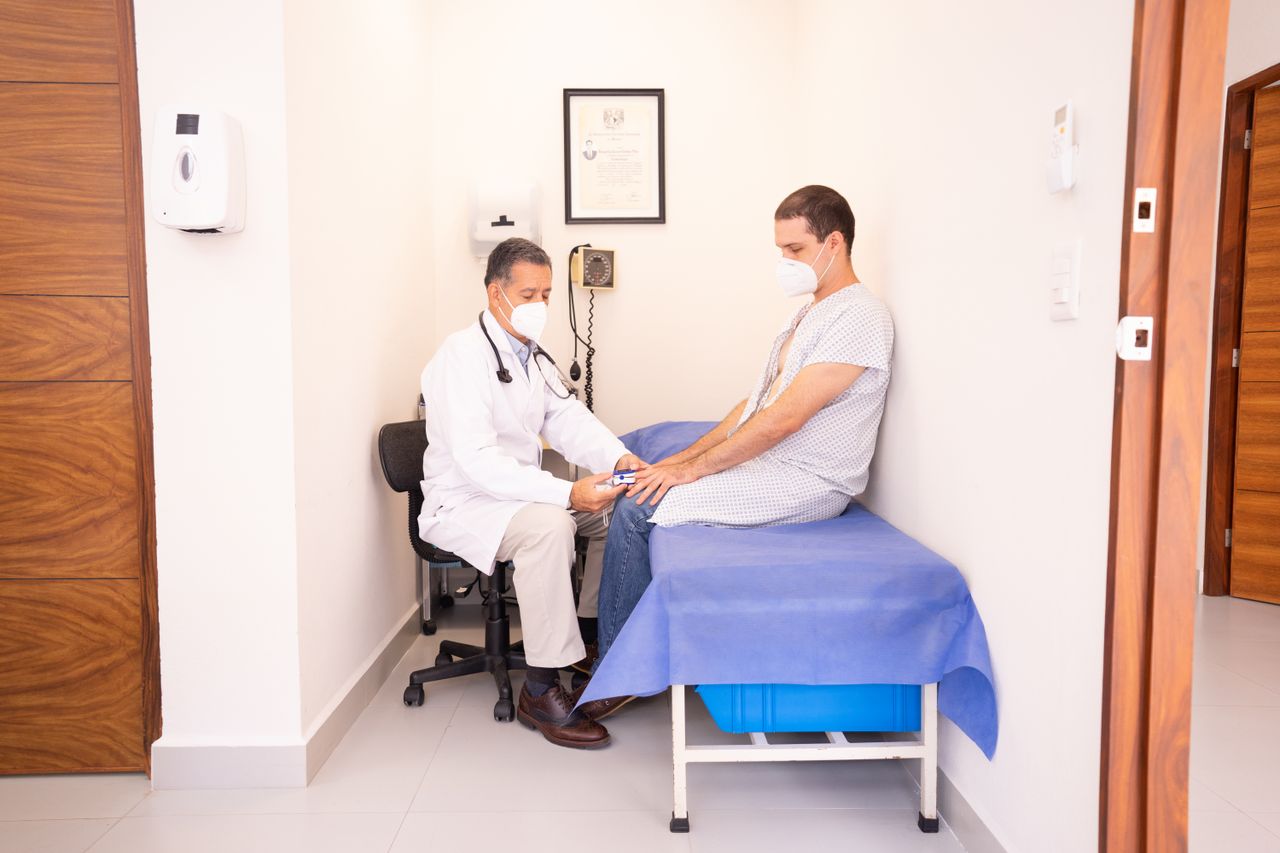

Urgent Care Billing in Los Angeles Overview
Los Angeles urgent care billing operates under three regulatory frameworks that do not exist in most other states: California Assembly Bill 72 (the surprise billing law predating federal NSA), the Knox-Keene Act requirements for HMO plan billing, and Medi-Cal managed care plan rules that differ significantly between L.A. Care, Health Net of California, and Molina CA. Understanding how these frameworks interact with standard urgent care billing practices is the difference between a financially stable Los Angeles urgent care center and one that writes off 20% of gross charges annually.
The Los Angeles urgent care market is exceptionally competitive. Over 300 locations in Los Angeles County alone, ranging from hospital-affiliated outpatient centers to independent multi-site operators. The payer mix reflects LA County’s demographics: a large Medi-Cal population, significant HMO commercial enrollment through employer groups, and a growing Medicare Advantage population. Each payer category requires distinct billing protocols that cannot be generalized across the patient panel.
California Payer Landscape for Urgent Care Practices
Medi-Cal managed care in Los Angeles County is dominated by L.A. Care Health Plan, Health Net of California, and Molina Healthcare of California. All three cover urgent care services without prior authorization for acute presentations, provided the urgent care center and treating provider are enrolled with the specific MCO. L.A. Care has its own provider enrollment and credentialing process separate from Health Net and Molina. Credentialing with one Medi-Cal MCO does not extend to another.
On the HMO commercial side, Los Angeles has an unusually high HMO enrollment rate relative to national averages, driven by large employer groups in entertainment, technology, and healthcare industries. Kaiser Permanente, Anthem Blue Cross HMO, and Health Net HMO are dominant HMO payers in LA. HMO plans require that urgent care centers be in-network with the specific HMO, not just with the parent insurer’s PPO network. An urgent care center in-network with Anthem Blue Cross PPO is not automatically in-network with Anthem Blue Cross HMO. For PPO commercial plans, Anthem Blue Cross, United Healthcare, Aetna, and Cigna are the primary payers.
Common Billing Issues for Los Angeles Urgent Care Providers
- California AB 72 balance billing compliance: California Assembly Bill 72 (effective 2017) prohibits most surprise billing for out-of-network services at in-network facilities. Los Angeles urgent care centers that participate with any commercial insurer’s network must comply with AB 72 when treating out-of-network plan members at those facilities. This requires specific patient disclosures before services, and payment disputes must be resolved through the state’s dispute resolution process rather than through patient billing. Federal No Surprises Act rules add another layer on top of AB 72 for certain situations.
- HMO plan urgent care routing errors: Los Angeles urgent care centers frequently treat HMO members who present without verifying their plan’s urgent care coverage terms. Kaiser Permanente HMO members are typically only covered for urgent care at Kaiser facilities unless they are traveling more than 30 miles from their home facility. Treating Kaiser HMO members at a non-Kaiser urgent care center without an urgent care exception results in claims that Kaiser will not pay and that you may be prohibited from collecting from the patient under AB 72.
- L.A. Care provider enrollment gaps for mid-level providers: L.A. Care requires individual enrollment for every treating provider, including nurse practitioners and physician assistants. Los Angeles urgent care centers with high mid-level provider volume frequently have gaps where NPs or PAs are not individually enrolled with L.A. Care. Claims billed under a supervising physician’s NPI for visits actually performed by an unenrolled mid-level provider are subject to audit recoupment demands from L.A. Care.
- Medi-Cal timely filing with L.A. Care versus Health Net: L.A. Care enforces a 180-day timely filing window from date of service. Health Net of California enforces a 12-month window. Los Angeles urgent care centers that apply a single timely filing policy across all Medi-Cal MCOs frequently lose L.A. Care claims that are submitted within the Health Net window but after the L.A. Care deadline.
Key CPT Codes for Urgent Care in California
- CPT 99203 (new patient, low complexity): Standard new patient code for acute minor presentations in Los Angeles urgent care. Medi-Cal reimburses at $74 to $92 in the LA market. Anthem Blue Cross and United Healthcare reimburse at $88 to $116 for in-network urgent care centers. Requires low-complexity MDM documentation or 30 minutes of total provider time under 2021 AMA guidelines.
- CPT 99214 (established patient, moderate complexity): Covers complex established patient presentations including poorly controlled chronic conditions, wound infections, and acute exacerbations of asthma or COPD. Medi-Cal reimburses at $88 to $108. Anthem Blue Cross CA reimburses at $98 to $128 for in-network providers. Requires moderate MDM documentation or 30 minutes of total provider time.
- CPT 87880 (rapid strep antigen detection): Covered by L.A. Care, Health Net, and Molina CA for qualifying throat diagnoses. Must be linked to ICD-10 J02.0 or J02.9. L.A. Care requires the treating provider’s individual NPI on diagnostic test claims, not the facility NPI, for mid-level providers billing under their own enrollment.
- CPT 71046 (chest X-ray, 2 views): Covered by all three Medi-Cal managed care plans and major commercial payers in Los Angeles for acute respiratory indications. Health Net of California requires documentation of the specific clinical indication in the visit note for radiography claims. ICD-10 codes R05.9 (cough), J18.9 (pneumonia), and J45.901 (unspecified asthma with acute exacerbation) are the most commonly accepted diagnoses.
- CPT 12002 (simple laceration repair, 2.6-7.5 cm): Frequently billed in Los Angeles urgent care for moderate-size lacerations. Documentation requirements for all California Medi-Cal MCOs include wound measurement, wound depth assessment, repair materials used, and provider’s credentials. Anthem Blue Cross CA requires a photograph or diagram of the wound location and size in the medical record for laceration repairs over 5 cm.
Revenue Cycle for Urgent Care Practices in Los Angeles
The combination of AB 72 compliance, HMO network complexity, and Medi-Cal MCO-specific billing rules makes Los Angeles urgent care revenue cycle management technically demanding relative to most other California markets. The financial stakes are proportionally high: a Los Angeles urgent care center seeing 100 patients per day at an average reimbursement of $165 generates $16,500 in daily gross collections. A 15% denial rate means $2,475 per day in claims at risk. Over a 22-business-day month, that is $54,450 in monthly denied revenue requiring active management.
The most financially stable Los Angeles urgent care operators build revenue cycle infrastructure that matches the complexity of their payer mix. That means payer-specific credentialing tracking for every provider across every Medi-Cal MCO and HMO network, real-time eligibility verification with plan type identification (HMO vs. PPO vs. Medi-Cal) before every visit, and denial follow-up tiered by the timely filing deadline of each specific payer rather than by denial date.
How My Medical Bill Solution Helps Los Angeles Urgent Care Providers
My Medical Bill Solution provides urgent care billing services to centers throughout Los Angeles County. We manage individual provider enrollment with L.A. Care, Health Net, and Molina CA, verify HMO plan network status before every visit to prevent Kaiser and other closed-network HMO billing errors, maintain AB 72 and No Surprises Act compliance documentation for out-of-network situations, and apply 2021 AMA E&M coding standards to every visit type. We tier our denial follow-up by payer-specific timely filing deadline and work every denial within 14 days of receipt. Contact My Medical Bill Solution today for a free billing assessment tailored to your Los Angeles urgent care operation.