
Neuroradiology Medical Billing Overview
Neuroradiology billing operates under the technical and professional component framework that governs all radiology billing, but the complexity of central nervous system imaging studies and the rapid evolution of AI-assisted interpretation add layers of coding specificity that distinguish this specialty from general radiology. The professional component, billed with modifier 26, covers the radiologist’s interpretation and report. The technical component, billed with modifier TC, covers the equipment, contrast agents, staff, and facility. Global billing covers both when a single entity provides the complete service. Medicare, Medicaid, and payers including BCBS, UnitedHealthcare, and Cigna each apply the Radiology Relative Value Scale and site-of-service differentials differently, and errors in component separation are among the most frequent audit targets in this specialty.
The introduction of specific CPT codes for AI-assisted analysis of neuroimaging, including the Category III codes for machine-learning-based detection of intracranial hemorrhage and ischemic stroke, adds a new billing dimension that most neuroradiology practices have not yet formalized. Billing these services requires specific documentation of the AI system used, the radiologist’s supervisory role, and the clinical context in which the technology was applied. Payer coverage of Category III codes for AI interpretation remains inconsistent, with only a subset of commercial payers having issued formal coverage determinations.
Common Billing Challenges in Neuroradiology
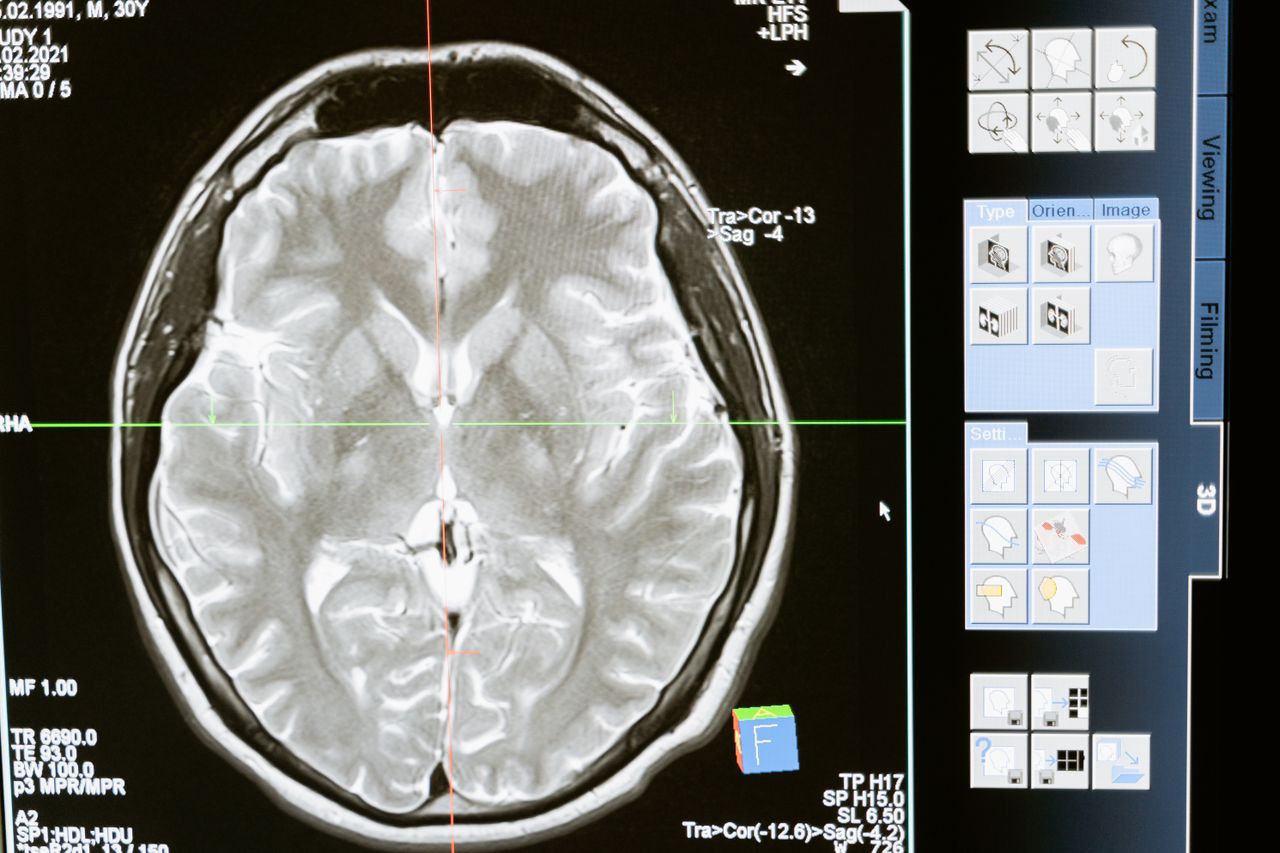
- Contrast versus non-contrast coding errors: Brain MRIs without contrast are coded 70551, with contrast are coded 70552, and with and without contrast are coded 70553. Selecting the wrong code based on the order rather than the actual study performed, or failing to document the clinical justification for contrast administration, results in downcoding and payer audits. Aetna and Humana have specific prior authorization requirements for contrast use in elective outpatient studies.
- Split interpretations and second read billing: When a general radiologist performs an initial read and a neuroradiologist performs a subspecialty second interpretation, only one interpretation is billable unless the second read constitutes a formal consultation with a separate clinical question, documented in a distinct report. Billing two interpretations on the same study without this distinction results in duplicate claim denials.
- Prior authorization failures for advanced neuroimaging: PET brain scans, functional MRI, and certain CT perfusion studies require prior authorization from UnitedHealthcare, BCBS, and Cigna before the study is performed. Authorization obtained for one modality does not transfer to a related but different study. Performing a fMRI when a standard brain MRI was authorized results in a post-service denial with limited appeal options.
- Global versus component billing in multi-entity settings: When the hospital or outpatient imaging center owns the equipment and employs the technical staff but the neuroradiologist is an independent contractor, the radiologist must bill only modifier 26 and the facility bills TC. Billing global codes in this arrangement results in overpayment, which triggers refund demands from Medicare and commercial payers.
Key CPT Codes for Neuroradiology Billing
- 70553: MRI brain with and without contrast material; the highest-volume neuroradiology code in outpatient settings, covering comprehensive brain evaluation with gadolinium enhancement
- 70498: CT angiography, neck, with contrast material including noncontrast images, if performed, and image postprocessing; used for carotid artery evaluation and stroke workup
- 70544: Magnetic resonance angiography, head, without contrast; indicated for non-invasive vascular assessment of circle of Willis and intracranial vessels
- 70558: MRI brain, functional, with administration of contrast material; used in presurgical mapping for epilepsy and tumor planning
- 61640: Balloon dilatation of intracranial vasospasm; interventional neuroradiology procedure code for treatment of cerebral vasospasm in subarachnoid hemorrhage
Revenue Cycle Considerations for Neuroradiology
Neuroradiology practices operating in the independent physician model, reading remotely for hospital clients or teleradiology networks, face specific A/R challenges tied to contract terms with facilities. A/R days in this model average 38 to 55 days, and the primary leakage points are professional fee undercoding, missing modifier 26 application, and failure to capture add-on codes for advanced MRI sequences or 3D reconstructions billed under CPT 76376 and 76377. These add-on codes require documentation that the reconstruction was performed independently and was not part of the base study workflow.
Medicare’s Imaging Appropriate Use Criteria program, now in the payment penalty phase, requires that advanced diagnostic imaging ordered for Medicare patients be documented with a consultation with a clinical decision support mechanism before the study is performed. Neuroradiology groups billing for studies ordered without CDSM documentation face payment penalties that accumulate silently if billing teams are not monitoring for this requirement.
How My Medical Bill Solution Helps Neuroradiology Practices
My Medical Bill Solution provides neuroradiology billing expertise across the professional component, global billing, and interventional procedure coding frameworks. We manage prior authorization workflows for advanced studies with UnitedHealthcare, BCBS, Aetna, and Cigna, and we monitor Medicare’s Appropriate Use Criteria compliance requirements to prevent payment penalties from accumulating on your account. We apply component modifiers correctly for independent radiologist and hospital-owned equipment arrangements, capture add-on codes for 3D reconstruction and advanced MRI sequences, and audit every claim for contrast code selection accuracy before submission. Contact My Medical Bill Solution to schedule a neuroradiology billing review.